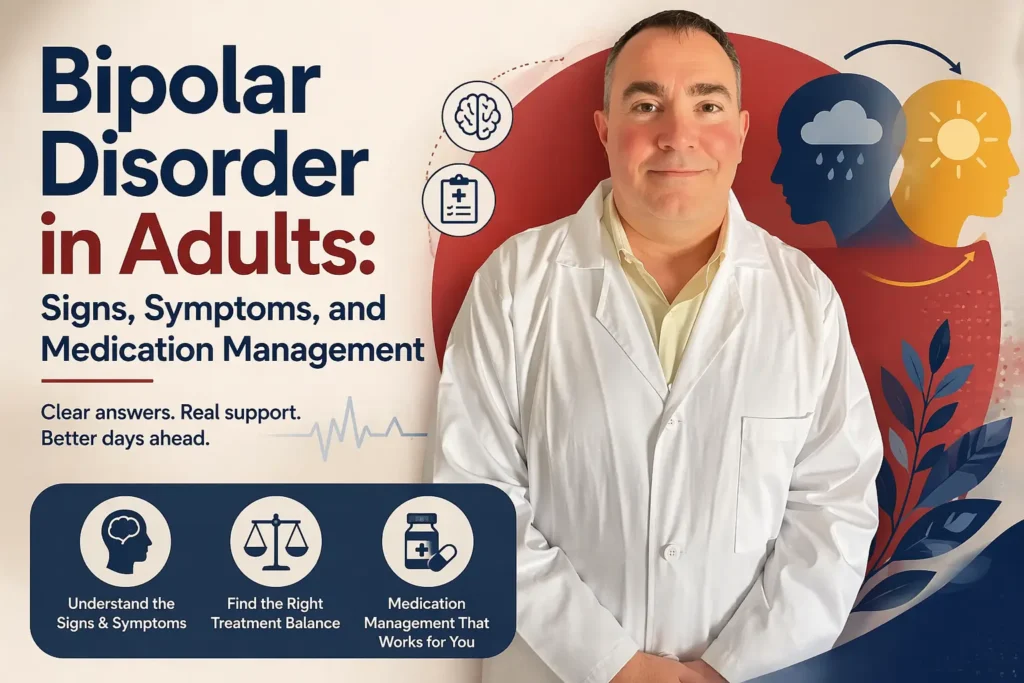
Bipolar disorder is one of the most frequently misdiagnosed conditions in outpatient psychiatry. In my more than 20 years of practice in Trenton, NJ, I have evaluated many adults who were treated for depression for years, sometimes with antidepressants that actually worsened their course, before a careful clinical history revealed bipolar disorder. Getting the diagnosis right is not a formality. It is the difference between a treatment that helps and one that can destabilize mood further.
What Bipolar Disorder Actually Is
Bipolar disorder is a mood disorder characterized by episodes of mania or hypomania alternating with depressive episodes. It is not simply ‘mood swings’ in the colloquial sense, everybody’s mood varies. Bipolar episodes are sustained, severe shifts in mood and energy that represent a clear departure from baseline functioning and last days to weeks.
There are two primary presentations I evaluate for:
Bipolar I Disorder
Defined by at least one manic episode lasting at least seven days, or any duration if hospitalization is required. Manic episodes involve elevated or irritable mood, dramatically decreased need for sleep without fatigue, racing thoughts, pressured speech, grandiosity, and impulsive high-risk behavior. Depressive episodes commonly occur as well, but a single manic episode establishes the diagnosis.
Bipolar II Disorder
Defined by at least one hypomanic episode and at least one major depressive episode, with no history of full mania. Hypomania is a less severe form of mania, the person is elevated, more energetic, more productive, and may actually feel very good, which is part of why it often goes unidentified. Patients with Bipolar II typically present for help during depressive episodes, not hypomanic ones. This is the core reason for misdiagnosis.
Why Bipolar Disorder Is Frequently Misdiagnosed as Depression
The depressive phase of bipolar disorder is clinically indistinguishable from unipolar depression on symptom description alone. Patients present with low mood, fatigue, anhedonia, sleep disruption, and cognitive slowing, identical to major depressive disorder. Without a careful history specifically probing for hypomanic or manic episodes, the diagnosis can be missed entirely.
The history I take includes: Have there been periods, even brief ones, when you needed much less sleep but did not feel tired? When your thoughts were racing and you had an unusual amount of energy? When you were significantly more talkative, or spent money impulsively, or took risks you would not normally take? These questions often surface episodes that patients did not identify as symptoms — they thought they were just ‘having a good month.’
Why Correct Diagnosis Matters: The Antidepressant Problem
This is clinically critical: antidepressants prescribed without a mood stabilizer in bipolar disorder can trigger hypomanic or manic episodes, accelerate mood cycling, or cause a mixed state, a simultaneous combination of depressive and manic symptoms that is among the most distressing and highest-risk presentations in psychiatry. If you have been prescribed multiple antidepressants that ‘stopped working’ or ‘made things worse,’ bipolar disorder should be seriously considered in a formal evaluation.
Medication Management for Bipolar Disorder
The pharmacological treatment of bipolar disorder is substantially different from depression treatment and requires ongoing psychiatric management. The core medication classes I use include:
Mood Stabilizers
Lithium remains one of the most effective treatments for Bipolar I and has the strongest evidence for reducing suicide risk in bipolar disorder, a benefit not matched by other mood stabilizers. It requires regular blood level monitoring and renal function assessment. Valproate (Depakote) is another commonly used mood stabilizer, particularly for rapid cycling or mixed episodes. Lamotrigine (Lamictal) is particularly effective for the depressive phase of bipolar disorder and is well-tolerated.
Atypical Antipsychotics
Several atypical antipsychotics, quetiapine, olanzapine, aripiprazole, lurasidone, have FDA indications for bipolar disorder and are frequently used, particularly for acute mood episodes or as adjunctive mood stabilization. Each has a different side effect profile, which I discuss in detail with patients before prescribing.
What to Expect in My Practice
A bipolar disorder evaluation at my Trenton, NJ office includes a thorough clinical history, review of prior treatment records where available, and a discussion of the diagnostic picture, including any diagnostic uncertainty. I do not rush bipolar diagnoses. I would rather take the time to get it right than start a medication regimen based on an incomplete picture.
For established patients, medication management for bipolar disorder includes monitoring for mood episode recurrence, medication side effects, and metabolic parameters. particularly for patients on mood stabilizers or antipsychotics. TelePsychiatry follow-up appointments are available for ongoing management. Call (609) 588-0250 to schedule an evaluation.