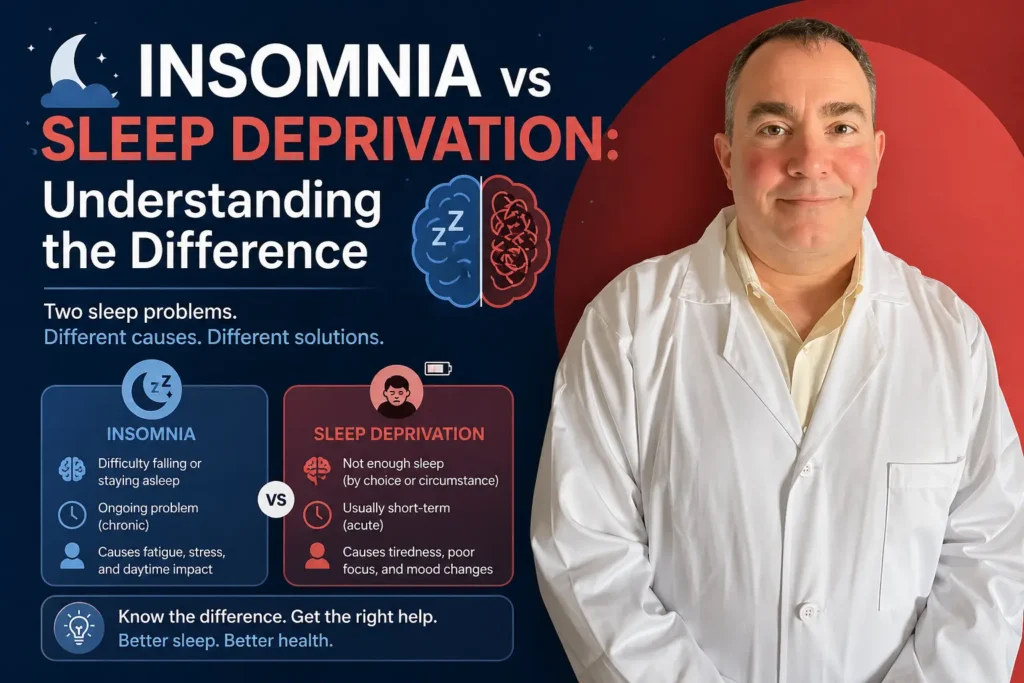
Sleep problems are one of the most common complaints in mental health care, but not all sleep issues are the same. Two commonly confused conditions are insomnia and sleep deprivation. While they may feel similar, their causes, effects, and treatments are very different.
What Is Insomnia?
Insomnia is a sleep disorder where a person struggles to fall asleep, stay asleep, or wake up too early, despite having enough time and opportunity to sleep.
Common symptoms:
- Lying awake for long periods
- Frequent nighttime awakenings
- Waking up feeling unrefreshed
- Anxiety about sleep
Insomnia is often linked to underlying mental health conditions like anxiety or depression.
What Is Sleep Deprivation?
Sleep deprivation occurs when a person does not get enough sleep due to lifestyle or external factors.
Common causes:
- Work schedules
- Screen time before bed
- Poor sleep habits
- Parenting or caregiving demands
Unlike insomnia, sleep deprivation is not about inability, it’s about insufficient sleep opportunity.
Key Differences That Matter
Factor | Insomnia | Sleep Deprivation |
Cause | Psychological/medical | Lifestyle |
Sleep opportunity | Available | Limited |
Ability to sleep | Difficult | Possible |
Treatment | Therapy (CBT-I), psychiatric care | Behavior change |
Why Misunderstanding Leads to Poor Treatment
Treating insomnia like sleep deprivation (e.g., “just go to bed earlier”) often fails. Likewise, using medication for sleep deprivation doesn’t address the real issue.
At David Bresch MD, accurate diagnosis ensures patients receive the right treatment from the start.
When to Seek Help
- Sleep issues lasting more than 2–3 weeks
- Daytime fatigue affecting function
- Sleep anxiety or frustration
- Coexisting anxiety or depression
2. The Psychiatric Causes of Insomnia: Anxiety, Depression, and PTSD
Insomnia is rarely just about sleep. In many cases, it’s a symptom of an underlying psychiatric condition.
Anxiety and Insomnia
Anxiety activates the brain’s alert system, making it difficult to relax.
Common patterns:
- Racing thoughts at night
- Fear of not sleeping
- Physical tension
This creates a cycle where anxiety worsens insomnia, and insomnia worsens anxiety.
Depression and Sleep Disturbance
Depression affects sleep differently:
- Early morning awakening
- Oversleeping (hypersomnia)
- Fragmented sleep
Sleep disruption is often one of the earliest signs of depression.
PTSD and Sleep Disruption
Post-traumatic stress disorder significantly impacts sleep.
Symptoms include:
- Nightmares
- Night sweats
- Hypervigilance
- Fear of falling asleep
Why Treating the Root Cause Matters
Focusing only on sleep symptoms often leads to temporary relief. Treating the underlying psychiatric condition leads to lasting improvement.
At David Bresch MD, treatment plans integrate both sleep medicine and mental health care.
3. Sleep Apnea and Mental Health: What Your Psychiatrist Can Identify
Sleep apnea is a common but underdiagnosed condition that can significantly affect mental health.
What Is Sleep Apnea?
Sleep apnea is a disorder where breathing repeatedly stops and starts during sleep.
Common symptoms:
- Loud snoring
- Gasping for air at night
- Morning headaches
- Daytime fatigue
The Mental Health Connection
Sleep apnea can mimic or worsen psychiatric conditions:
- Depression
- Anxiety
- Irritability
- Cognitive impairment
Many patients are treated for depression when untreated sleep apnea is the underlying issue.
Why Psychiatrists Play a Key Role
A psychiatrist trained in sleep medicine can identify patterns such as:
- Treatment-resistant depression
- Persistent fatigue
- Poor concentration despite medication
At David Bresch MD, patients are evaluated holistically, ensuring nothing is overlooked.
4. Cognitive Behavioral Therapy for Insomnia (CBT-I): What Dr. Bresch Recommends
CBT-I is considered the gold standard treatment for chronic insomnia.
What Is CBT-I?
CBT-I is a structured, evidence-based therapy that focuses on changing thoughts and behaviors that interfere with sleep.
Core Components
1. Sleep Restriction
Limits time in bed to improve sleep efficiency.
2. Stimulus Control
Rebuilds the association between bed and sleep.
3. Cognitive Restructuring
Addresses negative thoughts about sleep.
4. Sleep Hygiene Education
Improves habits and routines.
Why CBT-I Works Better Than Medication
- Long-term effectiveness
- No dependency risk
- Treats root causes
At David Bresch MD, CBT-I is tailored to each patient’s needs.
5. How Sleep Disorders Affect Mood and Cognition
Sleep is essential for brain function. When disrupted, it impacts both emotional and cognitive health.
Effects on Mood
- Increased irritability
- Emotional instability
- Higher risk of depression
- Heightened anxiety
Effects on Cognition
- Poor concentration
- Memory problems
- Slower processing speed
- Reduced decision-making ability
The Brain–Sleep Connection
Sleep regulates neurotransmitters like serotonin and dopamine, key players in mood and mental clarity.
Why Early Treatment Matters
Untreated sleep disorders can lead to worsening mental health over time.
At David Bresch MD, early intervention helps restore both sleep and overall well-being.
6. When to See a Sleep Medicine Specialist vs a Sleep Center in NJ
Knowing where to seek help can be confusing.
See a Psychiatrist (Sleep Specialist) If:
- You have insomnia linked to anxiety or depression
- You experience racing thoughts at night
- Sleep issues are chronic
Visit a Sleep Center If:
- You suspect sleep apnea
- You need a sleep study
- You experience breathing-related sleep issues
The Best Approach: Integrated Care
Many patients benefit from both:
- Psychiatric evaluation
- Sleep study (if needed)
At David Bresch MD, patients receive coordinated care that addresses both mental health and sleep disorders.
Struggling with sleep, fatigue, or insomnia?
Book a consultation with David Bresch MD and take the first step toward better sleep and better mental health.