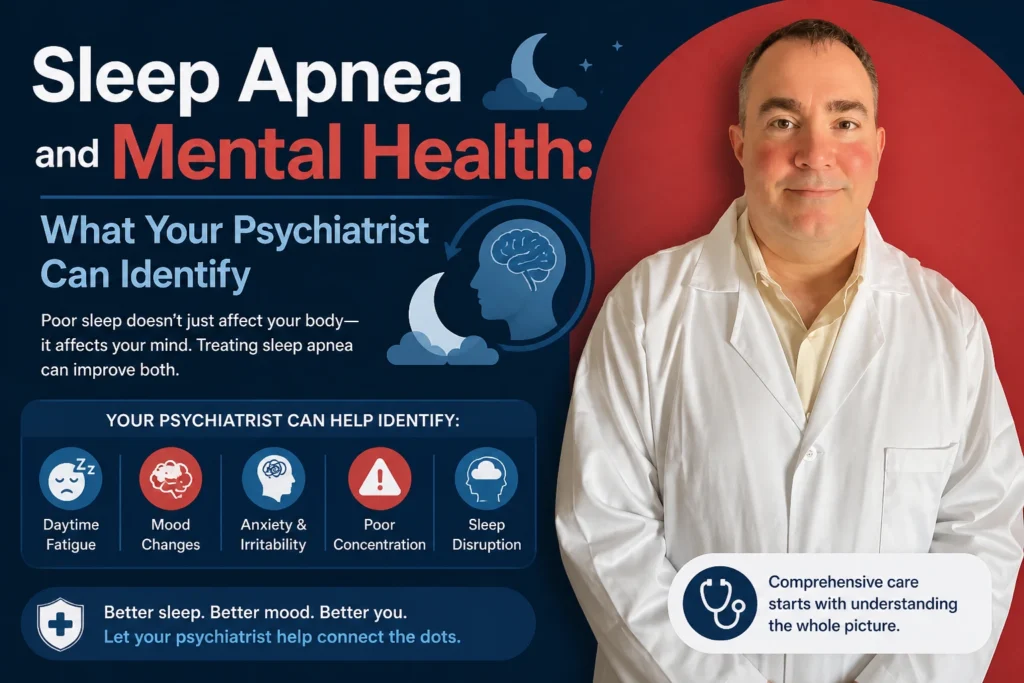
Sleep apnea is one of the most underdiagnosed, and misunderstood, conditions affecting both physical and mental health. While many people associate it with loud snoring or breathing interruptions, its impact goes far beyond sleep quality.
In fact, untreated sleep apnea can mimic, worsen, or even cause symptoms of mental health disorders, including depression, anxiety, and cognitive impairment.
What makes this even more important is that many patients seek psychiatric care for mood or attention issues, without realizing that a sleep disorder may be the root cause.
At David Bresch MD, sleep and mental health are evaluated together, ensuring that underlying conditions like sleep apnea are not overlooked.
What Is Sleep Apnea?
Sleep apnea is a disorder in which breathing repeatedly stops and starts during sleep. These interruptions can occur dozens, or even hundreds, of times per night.
Types of Sleep Apnea
1. Obstructive Sleep Apnea (OSA)
The most common type, caused by a physical blockage of the airway during sleep.
2. Central Sleep Apnea
Occurs when the brain fails to send proper signals to control breathing.
3. Complex Sleep Apnea
A combination of obstructive and central sleep apnea.
What Happens to the Brain During Sleep Apnea?
Each time breathing stops, the body experiences a brief drop in oxygen levels. The brain responds by waking you up, often so briefly that you don’t remember it.
This cycle leads to:
- Fragmented sleep
- Reduced deep sleep
- Increased stress hormone release
- Poor oxygen delivery to the brain
Over time, this has a significant impact on both physical and mental health.
Common Symptoms of Sleep Apnea
Many people with sleep apnea are unaware they have it.
Nighttime Symptoms
- Loud snoring
- Gasping or choking during sleep
- Frequent awakenings
- Restless sleep
Daytime Symptoms
- Chronic fatigue
- Morning headaches
- Difficulty concentrating
- Irritability
- Memory problems
Because these symptoms overlap with psychiatric conditions, sleep apnea is often misdiagnosed.
The Mental Health Connection
Sleep apnea doesn’t just affect sleep, it affects how the brain functions.
1. Depression and Sleep Apnea
Many individuals diagnosed with depression may actually have untreated sleep apnea.
Why?
- Poor sleep disrupts mood regulation
- Low oxygen levels affect brain chemistry
- Chronic fatigue reduces motivation
Key Insight:
Treating sleep apnea often leads to significant improvement in depressive symptoms.
2. Anxiety and Sleep Apnea
Sleep apnea can also contribute to anxiety symptoms.
Mechanisms include:
- Nighttime breathing interruptions triggering panic-like responses
- Increased cortisol (stress hormone)
- Poor sleep leading to emotional dysregulation
Some patients even experience nighttime awakenings that feel like panic attacks.
3. Cognitive Impairment and Brain Fog
Sleep apnea significantly impacts cognitive function.
Common effects:
- Poor concentration
- Memory issues
- Slower processing speed
- Reduced attention span
These symptoms are often mistaken for ADHD or age-related decline.
Why Sleep Apnea Is Often Missed in Psychiatry
Many patients seek psychiatric care for:
- Depression
- Anxiety
- Fatigue
- Focus problems
However, standard mental health evaluations may not always include detailed sleep assessments.
Warning Signs That Suggest Sleep Apnea
- Treatment-resistant depression
- Persistent fatigue despite adequate sleep time
- Loud snoring (reported by a partner)
- Morning headaches
- Difficulty concentrating
At David Bresch MD, these patterns are carefully evaluated to identify possible sleep-related causes.
The Role of a Psychiatrist in Identifying Sleep Apnea
A psychiatrist trained in sleep medicine brings a unique advantage.
They evaluate:
- Behavioral symptoms
- Emotional patterns
- Medication effects
- Sleep habits
- Physical indicators
This comprehensive view allows for early identification of sleep apnea, even before formal testing.
Diagnosis: What to Expect
If sleep apnea is suspected, the next step is a sleep study.
Types of Sleep Studies
1. Home Sleep Study
Convenient, done in your own bed.
2. In-Lab Sleep Study
More detailed monitoring in a clinical setting.
These tests measure:
- Breathing patterns
- Oxygen levels
- Heart rate
- Sleep stages
Treatment Options for Sleep Apnea
The good news is that sleep apnea is highly treatable.
1. CPAP Therapy (Continuous Positive Airway Pressure)
The most common and effective treatment.
- Keeps airways open during sleep
- Improves oxygen levels
- Restores sleep quality
2. Oral Appliances
Custom devices that reposition the jaw to keep airways open.
3. Lifestyle Changes
- Weight management
- Reducing alcohol use
- Sleeping on your side
4. Surgical Options
In some cases, surgery may be recommended.
How Treating Sleep Apnea Improves Mental Health
Many patients experience dramatic improvements after treatment.
Benefits include:
- Better mood
- Increased energy
- Improved concentration
- Reduced anxiety
- Enhanced overall well-being
This highlights the importance of identifying sleep apnea early.
The Overlap with Psychiatric Medications
Certain medications used in psychiatry can affect sleep apnea.
Examples:
- Sedatives may worsen airway obstruction
- Stimulants may mask fatigue symptoms
This is why coordinated care is essential.
At David Bresch MD, medication plans are carefully adjusted with sleep health in mind.
When to Seek Help
You should consider evaluation if you experience:
- Chronic fatigue despite sleeping 7–8 hours
- Loud snoring or breathing interruptions
- Morning headaches
- Brain fog or poor concentration
- Depression that doesn’t improve with treatment
Why Integrated Care Matters
Sleep apnea sits at the intersection of physical health and mental health.
Treating only one side often leads to incomplete results.
An integrated approach ensures:
- Accurate diagnosis
- Coordinated treatment
- Better long-term outcomes
Final Thoughts
Sleep apnea is more than a sleep disorder, it’s a condition that can significantly impact your mental health, cognitive function, and quality of life.
If left untreated, it can mimic or worsen psychiatric conditions, leading to years of unnecessary struggle.
The good news? It’s treatable, and often reversible.
Take the First Step
If you suspect your sleep issues may be affecting your mental health:
Schedule a consultation with David Bresch MD for a comprehensive evaluation that looks at both sleep and mental well-being.