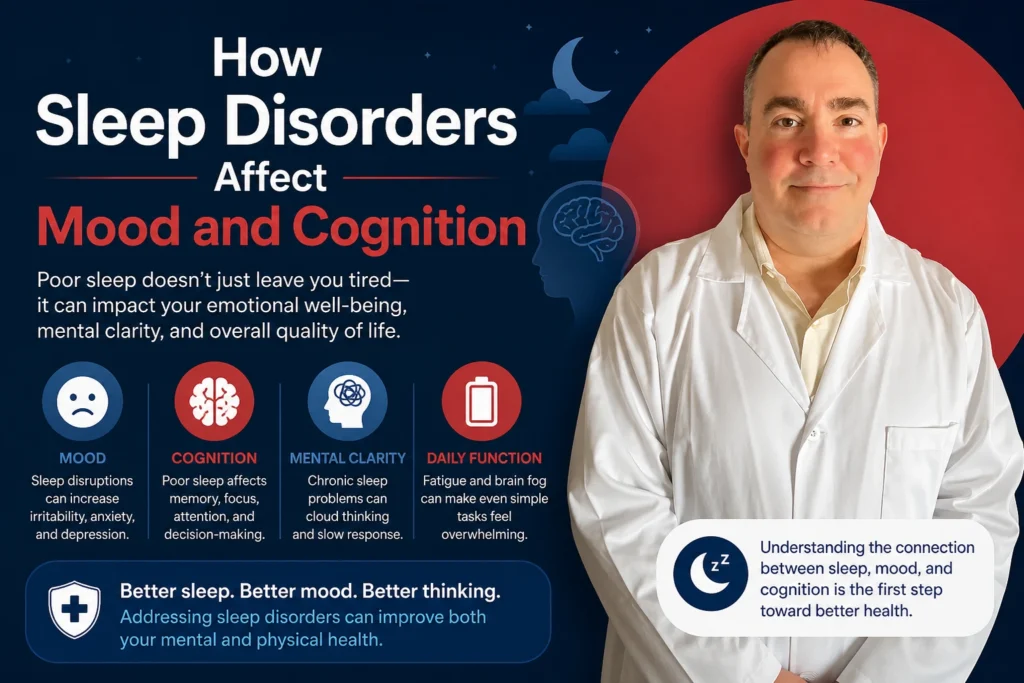
Sleep is often treated as a luxury, but in reality, it is one of the most critical biological functions for brain health. When sleep is disrupted, the effects go far beyond feeling tired. Sleep disorders can significantly impact mood, emotional regulation, memory, focus, and overall cognitive performance.
For many individuals, these effects are so pronounced that they resemble psychiatric or neurological conditions.
At David Bresch MD, sleep is evaluated as a core component of mental health, not just a secondary concern. Understanding how sleep disorders affect the brain is the first step toward meaningful and lasting improvement.
Why Sleep Is Essential for Brain Function
Sleep is not simply “downtime” for the brain, it is an active, restorative process that supports:
- Memory consolidation
- Emotional processing
- Neurotransmitter balance
- Cognitive performance
- Physical recovery
During sleep, the brain organizes information, regulates emotions, and clears metabolic waste. Without adequate sleep, these processes become impaired.
What Happens to the Brain When Sleep Is Disrupted
When sleep is fragmented or insufficient, several key systems are affected:
1. Prefrontal Cortex Impairment
The prefrontal cortex is responsible for:
- Decision-making
- Focus
- Impulse control
- Problem-solving
Sleep deprivation reduces its efficiency, leading to:
- Poor judgment
- Difficulty concentrating
- Increased impulsivity
2. Amygdala Overactivation
The amygdala controls emotional responses, especially fear and stress.
When sleep is disrupted:
- The amygdala becomes overactive
- Emotional reactions become stronger
- Stress tolerance decreases
This is why lack of sleep often leads to irritability and emotional reactivity.
3. Neurotransmitter Imbalance
Sleep regulates key brain chemicals such as:
- Serotonin (mood)
- Dopamine (motivation and focus)
- GABA (calming effect)
Disrupted sleep leads to imbalance, affecting both mood and cognition.
How Sleep Disorders Affect Mood
Sleep and mood are deeply interconnected. In fact, sleep disturbance is both a symptom and a cause of mood disorders.
Increased Irritability
Even a single night of poor sleep can make individuals more:
- Short-tempered
- Easily frustrated
- Emotionally reactive
Chronic sleep problems amplify these effects.
Anxiety and Emotional Instability
Sleep deprivation increases stress hormone levels, particularly cortisol.
This leads to:
- Heightened anxiety
- Increased worry
- Difficulty relaxing
Many patients report that their anxiety is significantly worse after poor sleep.
Depression and Low Mood
Sleep disorders are strongly linked to depression.
Key connections:
- Poor sleep reduces serotonin levels
- Fatigue reduces motivation
- Negative thinking increases
Over time, this can create a cycle:
- Poor sleep → low mood → worse sleep
Reduced Emotional Resilience
Sleep helps regulate emotional responses. Without it:
- Minor stressors feel overwhelming
- Coping ability decreases
- Emotional recovery slows
How Sleep Disorders Affect Cognition
Cognition refers to how we think, process information, and make decisions. Sleep disruption can significantly impair these abilities.
Memory Problems
Sleep is essential for memory consolidation.
When sleep is disrupted:
- Short-term memory weakens
- Long-term retention declines
- Learning becomes more difficult
Difficulty Concentrating
One of the most common complaints is inability to focus.
This includes:
- Trouble staying on task
- Easily distracted
- Reduced productivity
These symptoms often resemble ADHD.
Slower Processing Speed
Sleep deprivation slows down mental processing.
You may notice:
- Delayed reactions
- Difficulty understanding information
- Reduced efficiency
Impaired Decision-Making
Sleep-deprived individuals are more likely to:
- Make poor decisions
- Take unnecessary risks
- Struggle with problem-solving
The Link Between Sleep Disorders and Psychiatric Conditions
Sleep disorders often overlap with mental health conditions.
Common Combinations
- Insomnia + anxiety
- Sleep apnea + depression
- Circadian rhythm disorders + ADHD symptoms
In many cases, sleep problems worsen the psychiatric condition, and vice versa.
Sleep Disorders That Most Impact Mood and Cognition
1. Insomnia
- Difficulty falling or staying asleep
- Leads to fatigue, irritability, and poor focus
2. Sleep Apnea
- Interrupted breathing during sleep
- Causes brain fog, memory issues, and mood changes
3. Circadian Rhythm Disorders
- Misaligned sleep schedule
- Leads to daytime fatigue and cognitive impairment
4. Restless Sleep and Fragmented Sleep
- Frequent awakenings
- Reduces deep sleep quality
Why Many People Misinterpret These Symptoms
Because the symptoms overlap, many individuals assume they have:
- ADHD
- Depression
- Burnout
When in reality, the root cause may be poor sleep.
At David Bresch MD, evaluation includes both mental health and sleep patterns to ensure accurate diagnosis.
Long-Term Effects of Untreated Sleep Disorders
If left untreated, sleep disorders can lead to:
- Chronic anxiety or depression
- Cognitive decline
- Reduced work performance
- Increased risk of physical health issues
- Lower overall quality of life
Sleep is not optional, it is foundational to health.
How Improving Sleep Improves Brain Function
The good news is that many of these effects are reversible.
When sleep improves, patients often experience:
- Better mood stability
- Increased energy
- Improved focus
- Enhanced memory
- Greater emotional resilience
Treatment Approaches
1. Cognitive Behavioral Therapy for Insomnia (CBT-I)
- Addresses thought patterns and behaviors
- Improves sleep naturally
2. Sleep Apnea Treatment
- CPAP or other therapies
- Restores oxygen levels and sleep quality
3. Psychiatric Treatment
- Addresses anxiety, depression, or trauma
- Improves sleep indirectly
4. Lifestyle Adjustments
- Consistent sleep schedule
- Reduced screen time
- Stress management
When to Seek Professional Help
You should consider evaluation if:
- You feel tired despite sleeping enough hours
- You struggle with focus or memory
- Your mood is unstable or worsening
- Sleep problems persist for weeks
- You rely on caffeine or naps to function
Why Integrated Care Matters
Sleep disorders and mental health conditions are deeply connected.
Treating one without the other often leads to incomplete results.
At David Bresch MD, care is designed to address both simultaneously for optimal outcomes.
Final Thoughts
Sleep is one of the most powerful tools for maintaining mental clarity, emotional balance, and overall well-being.
When sleep is disrupted, every aspect of life can be affected, from how you think to how you feel.
The good news is that with the right diagnosis and treatment, these effects can be reversed.