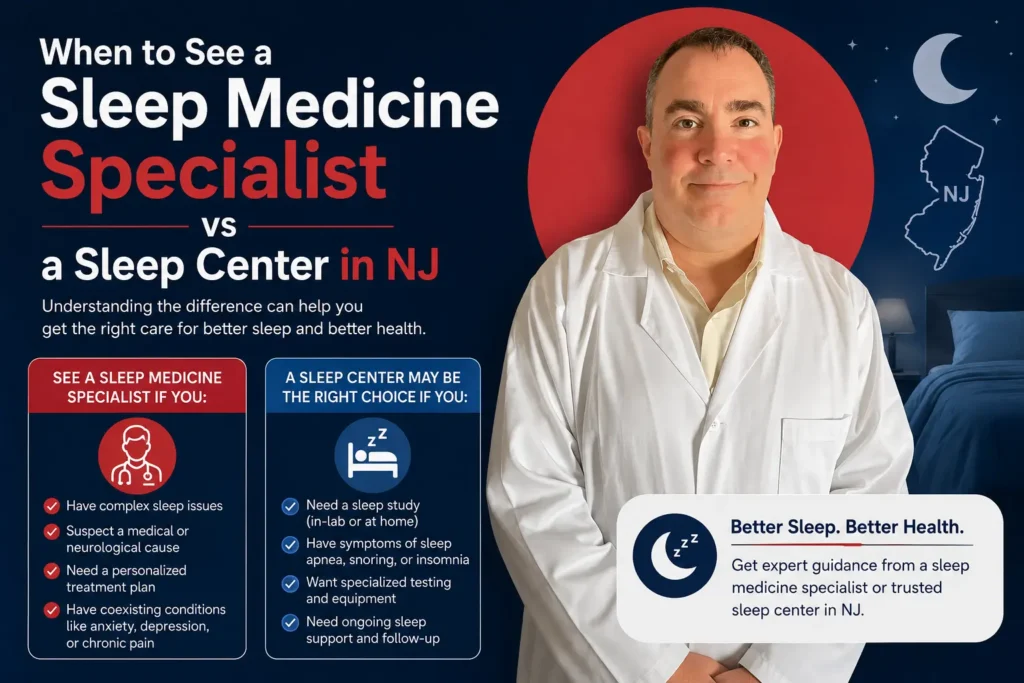
If you’re struggling with sleep, one of the most confusing decisions is knowing where to go for help. Should you see a sleep medicine specialist? Visit a sleep center? Or consult a psychiatrist?
The answer depends on the type of sleep problem you’re experiencing, and more importantly, what’s causing it.
Many patients spend months (or even years) seeking treatment in the wrong setting, leading to frustration, delayed diagnosis, and incomplete care.
At David Bresch MD, patients receive a comprehensive evaluation that helps determine the most appropriate path, whether that’s psychiatric care, sleep testing, or a combination of both.
Understanding the Difference: Sleep Specialist vs Sleep Center
Before deciding where to go, it’s important to understand what each option offers.
What Is a Sleep Medicine Specialist?
A sleep medicine specialist is a physician trained to diagnose and treat sleep disorders. Some specialists come from backgrounds in:
- Psychiatry
- Neurology
- Pulmonology
- Internal medicine
A psychiatrist with sleep expertise offers a unique advantage by addressing both mental health and sleep disorders together.
What Is a Sleep Center?
A sleep center is a facility that conducts sleep studies (polysomnography) to diagnose conditions like:
- Sleep apnea
- Periodic limb movement disorder
- Narcolepsy
Sleep centers focus primarily on physiological sleep disorders, often using diagnostic equipment and overnight monitoring.
Why Choosing the Right Option Matters
Sleep disorders are rarely one-dimensional.
For example:
- Insomnia may be caused by anxiety
- Fatigue may be due to sleep apnea
- Poor focus may stem from disrupted sleep
Choosing the wrong starting point can lead to:
- Delayed diagnosis
- Ineffective treatment
- Unnecessary testing
When to See a Sleep Medicine Specialist
You should consider seeing a sleep specialist, especially a psychiatrist, if your symptoms suggest a behavioral or psychological cause.
1. Chronic Insomnia
If you have difficulty falling or staying asleep for weeks or months, and especially if:
- You feel anxious about sleep
- Your mind races at night
- Sleep feels unpredictable
This often points to insomnia driven by mental health factors.
2. Anxiety or Depression Affecting Sleep
If your sleep problems are accompanied by:
- Excessive worry
- Low mood
- Lack of motivation
- Emotional distress
A psychiatric evaluation is essential.
At David Bresch MD, sleep is treated as part of a broader mental health picture.
3. Racing Thoughts at Night
If your brain feels “active” when your body is tired, this is often linked to:
- Anxiety
- Stress
- Cognitive overactivation
This is best addressed through therapies like CBT or CBT-I, not a sleep study alone.
4. Poor Sleep Despite Good Habits
If you’ve tried:
- Going to bed earlier
- Reducing screen time
- Improving sleep hygiene
…and nothing works, a deeper evaluation is needed.
5. Suspected Medication-Related Sleep Issues
Certain medications can affect sleep patterns.
A psychiatrist can:
- Adjust medications
- Identify side effects
- Optimize treatment
When to Visit a Sleep Center
A sleep center is the right choice when symptoms suggest a physical or physiological sleep disorder.
1. Suspected Sleep Apnea
Key signs include:
- Loud snoring
- Gasping or choking during sleep
- Morning headaches
- Excessive daytime sleepiness
A sleep study is necessary to confirm diagnosis.
2. Unexplained Daytime Fatigue
If you feel exhausted despite getting enough hours of sleep, this may indicate:
- Sleep apnea
- Narcolepsy
- Other sleep disorders
3. Abnormal Movements During Sleep
- Leg jerking
- Restless movement
- Disrupted sleep patterns
These conditions require monitoring in a sleep lab.
4. Shift Work or Circadian Rhythm Disorders
If your sleep schedule is misaligned due to work or lifestyle, specialized evaluation may be needed.
The Problem with Choosing Only One Approach
Many patients fall into one of these traps:
Going Only to a Sleep Center
- Sleep study shows mild or no issues
- Underlying anxiety or insomnia remains untreated
Seeing Only a Psychiatrist
- Sleep apnea or physical disorder goes undiagnosed
The Best Approach: Integrated Care
The most effective treatment often involves both psychiatric evaluation and sleep testing when needed.
At David Bresch MD, patients receive:
- Comprehensive sleep assessment
- Mental health evaluation
- Referral for sleep studies if indicated
- Coordinated, personalized treatment
How to Know Where to Start
If you’re unsure, ask yourself:
Do I struggle to fall asleep because my mind won’t stop?
Do I snore or stop breathing during sleep?
→ Start with a sleep center
Do I feel exhausted no matter how long I sleep?
→ You may need both
Red Flags That Require Immediate Attention
- Severe daytime sleepiness
- Falling asleep while driving
- Loud snoring with choking
- Worsening depression or anxiety
- Cognitive decline
These symptoms should not be ignored.
The Role of Telehealth in Sleep Care
Modern sleep medicine allows for:
- Virtual psychiatric consultations
- Remote sleep evaluations
- Home sleep studies
This makes care more accessible and convenient.
Long-Term Benefits of the Right Diagnosis
When patients receive the correct diagnosis and treatment, they often experience:
- Improved sleep quality
- Better mood
- Increased energy
- Enhanced focus
- Overall improved quality of life
Why Patients Choose a Psychiatrist First
Many sleep problems are rooted in:
- Stress
- Anxiety
- Behavioral patterns
Starting with a psychiatrist, especially one trained in sleep medicine, can help identify these issues early.
Final Thoughts
Sleep problems are complex, and choosing the right provider is essential for effective treatment.
The key is not just treating symptoms, but understanding the root cause.
Whether your sleep issues are psychological, physiological, or both, the right approach can make a life-changing difference.
Take the First Step
If you’re unsure where to begin:
Schedule a consultation with David Bresch MD for a comprehensive evaluation and personalized care plan.